Thursday, June 17 - 9:30 am
New Works Recital
James Ackley, Eric Berlin, David Cooper & John Aley,
Denver Dill, Dr. James L. Klages, Rex Richardson, Matt Shulman
Hamilton Recital Hall
John Irish, Reporter
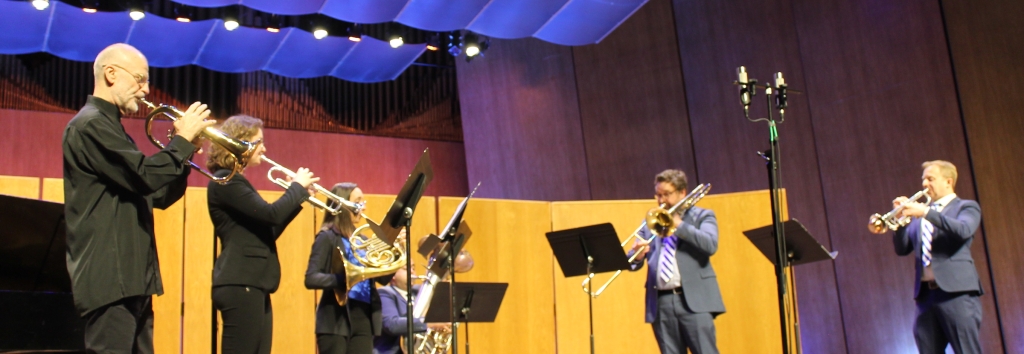
It is vital to introduce new works for our instrument; this mornings concert offered an excellent array of some of the newest works for trumpet.
 |
|
James Ackley
|
James Ackley, accompanied by Rebecca Wilt on piano, opened this concert of new compositions for trumpet with Rob Bradshaws Sonata for Trumpet and Piano. Bradshaw has also spent some time studying the trumpet and has professed a deep love for the instrument and its literature. These factors helped inspire him to write this sonata. In this recital only the first and fourth movements were performed. The first movement begins with a brooding slow introduction with the trumpet in harmon mute. A faster section followed focusing on a strong rhythmic interplay between the two instruments. With a wide range and demanding technical passages, Ackley compassed all the difficulties with ease and always with a big, beautiful sound. The fourth movement also offered driving rhythmic writing in the dialogue with the piano. The movement closed with a long-note chorale that provided a noble ending. Ackley showed a wide dynamic range, great technique, and impressive control in this new piece.
Charles Bestors Concerto Piccolo for trumpet and electronics is dedicated to Eric
 |
|
Eric Berlin
|
Berlin. Written in 2004 on models from the 17th and 18th centuries, the work replaces the traditional orchestra with electronic instruments, many of which are derived from electronic manipulations of the sound of the trumpet itself. The opening Praeludium contrasts the academic modal counterpoint of its thematic material with space-age manipulation of trumpet sounds and advanced techniques from the trumpet. The Fantasia featured an improvisation over a slowly oscillating electronic accompaniment. The sometimes ethereal and sometimes playful nature of this movement provided contrast between the two outer movements. The final Ostinato is a not-so-friendly duet between the trumpet and a series of electronic instruments developed in the previous movements. Berlins incredible sound and facility made for a winning performance of a very engaging piece.
 |
|
Denver Dill
|
Commissioned by the Equinox Duo, comprised by Denver Dill trumpet and Rebecca Wilt piano, David Gillinghams Sonata No. 1 for Trumpet and Piano is another welcomed work to the repertoire. Performing only the second and third movements of the piece, Dill showed total authority on the trumpet. The slow second movement is a lovely, very accessible melody with chordal piano accompaniment. Cup muted passages opened and closed the movement. Gorgeous, flowing lines permeated the feel of this attractive movement. The third movement is very fast and contains a wide range, energetic rhythms, and a need for technical fluency. A contemplative slower passage was sandwiched in between the livelier outer sectionsthe final section being a return to the movements opening material. Dills very impressive performance is convincing proof that this will indeed be a popular addition to the trumpet repertoire.
 |
|
Rex Richardson
|
Rex Richardson and Rebecca Wilt performed Reverie by Dinos Constantinides. This piece, originally written for violin but transcribed for trumpet by the composer, began in a slow, meditative vein. It gained momentum as the mood, harmonies, and texture increased to a more complex interplay. Ending with a brief cadenza, the work closed slowly and thoughtfully. Richardson himself wrote the next work 016 Fantasy. For trumpet alone, this original work was probably the newest composition todayit was just finished the pervious night! Its title refers to the intervallic relationship: 0-1-6 and is a work based on this sequence of intervals. Multiphonic effects were employed followed by a rapid and difficult series of ever-increasing intervals always grounded by repeated low pitches on g. A slower, lyrical section unfolded from the pyrotechnics but soon dissolved into the more fast-moving double-tongued sequence of the titled intervals. The multiphonic passage again was heard and brought this highly difficult work to a close. Kudos to both the composer and the soloist, for the bravura display of technical and musical fireworks.
 |
|
James Ackley
|
From Bela Bartoks 44 Violin Duets, David Cooper and John Aley performed nine short selections. Bartok suggested grouping these duets into little suites to be performed without pause. Bartok set the book in order from easy to progressively more difficult. Todays recital offered the nine in no particular order of difficulty. Bartoks unique harmonic language and engaging rhythms were always evident in these wonderful gems. Cooper and Aley matched sound and style well as they brought these pieces to life through their wonderful artistry. Performing on different pitched trumpets further added to the contrast and appeal. Judging from the reception these duets received, we should be hearing more Bartok in the practice rooms in the near future.
 |
|
Matt Schulman
|
Prelude and Fugue in C Minor for solo trumpet was composed and performed by Matt Shulman. The Prelude started with a quasi-improvisatory passage requiring the performer to cover the entire range of the trumpet. Very fast arpeggiations, multiphonics, and extended techniques were highlights of this improvisationally oriented movement. Further demonstrations of multiphonics and rapid figures continued in a harmon-muted section. Shulman continued by performing a passage paying homage to a Bach chaconne. His fast double-tonguing of wide intervals was most impressive.
David DeBoor Canfields Sonata for Trumpet and Piano culminated todays recital. Performed by James Klages and Rebecca Wilt, only the second and third
 |
|
James Klages
|
movements were performed in the interest of time. The piece was written expressly for Klages after he had healed from the grip of Multiple Sclerosis for 15 years. The second movement, Andante liberamente, is based on Klages favorite hymn, And Can it Be. It was written to give the trumpet long, muted notes with a flowing piano line underneath. The trumpet opens up and proclaims a boldly, noble line. Again muted, the trumpet states a simple melody over the slowly moving piano. Marked Tempo di tarantella, the third movement is fast, busy, and technically challenging with a wide tessitura and wide interval leaps. The movement offers no rest for the trumpeter, but Klages and Wilt made the piece sound easy.
|
Prelude
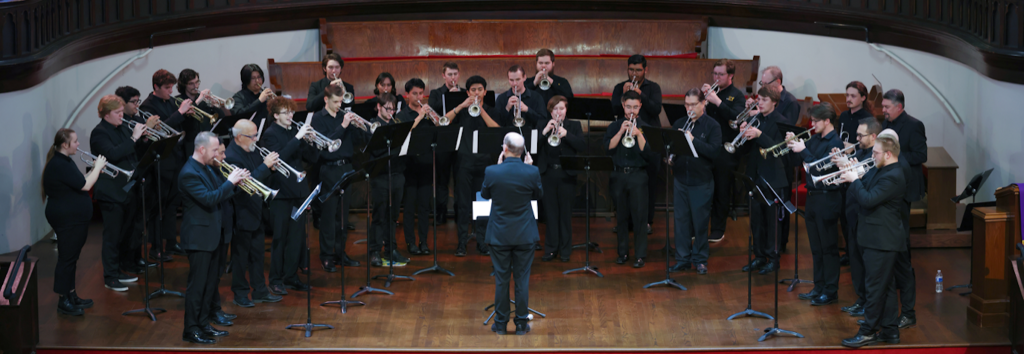
New Mexico State University Trumpet Ensemble
Dr. Frank Pancho Romero, director
Members: Jim Coggeshall, Jenny Cordova, Daniel Holmes, Dorothy Lanphere, Alan Lara , Daniel McCracken, Isaac Montellano, Maria Rainsdon, Anthony Rodriguez, Abel Sanchez
Hymn and Scherzo - Samuel Hollomon
Trumpet Soup (2004) - Justin Raines
Sonata for Trumpet and Piano - Rob Bradshaw
James Ackley, trumpet and Rebecca Wilt, piano
Concerto Piccolo for Trumpet and Electronics (2004) - Charles Bestor (b. 1924)
I. Praeludium
II. Fantasia
III. Ostinato
Eric Berlin, trumpet
Sonata No.1 for Trumpet and Piano - David Gillingham
II.
III.
Commissioned by The Equinox Duo
The Equinox Duo - Denver D. Dill, trumpet and Rebecca Wilt, piano
Reverie - Dinos Constantinides
016 Fantasy - Rex Richardson
Rex Richardson, trumpet and Rebecca Wilt, piano
Selections from the 44 Violin Duets - Bela Bartok
David Cooper and John Aley, trumpets
Prelude and Fugue in C Minor for Solo Trumpet - Matt Shulman (b. 1974)
Matt Shulman, trumpet
Sonata for Trumpet and Piano - David DeBoor Canfield (b. 1950)
I. Allegro energico
II. Andante liberamente
III. Tempo di tarantella
Dr. James L. Klages, trumpet and Rebecca Wilt, piano
|