John Irish, Reporter
The incredible magnificence of Manchesters 15th Century Cathedral was an ideal setting for trumpet music. The ability to perform music in a setting similar to that for which many of these pieces were conceived definitely added to the majesty and awe-inspiring Manchester Cathedral Concert performances. After a brief, but welcomed, detour to a reception at the Chethams School of Music nearby, the concert commenced with Sonata #1 for trumpet ensemble from the Portuguese Charamela Real collection. The Orfeo Trumpet Consort gave a stirring performance on modern trumpets and set the tone for the rest of the evening.
 |
|
Alison Balsom and Crispian Steele-Perkins
|
Accompanied by the Chamber Strings of the Chethams School of Music, Crispian Steele-Perkins and Alison Balsom performed the popular Concerto for 2 Trumpets by Antonio Vivaldi on natural trumpets. The small string ensemble, the size of groups in Vivaldis day, was a perfect fit for the noble sound of Baroque trumpets. With great élan and verve, Vivaldis famous work was brought to life amid the enormous gothic arches, glorious leaded glass, detailed woodwork, and impressive choir/altar area. The two trumpeters negotiated the many twists and turns of the piece with confident ease, demonstrating that Baroque music can be exciting and beautiful when performed on these instruments. Leopold Mozarts Concerto in D was heard next, this time with organ accompaniment, played by Jonathan Scott who played brilliantly throughout the evening. Playing only the first movement, Crispian Steele-Perkins again demonstrated his marvelous virtuosity on the Baroque trumpet in this very engaging work. Various adaptations of music from Handel (by Steele-Perkins) were offered next. Three short movements, played on the piccolo trumpet, made up this suite of familiar-sounding pieces. Entitled Suite No. 2 by Mr. Steele-Perkins, the highlight of the suite for this writer was the stunningly beautiful middle movement, originally found in an opera by Handel, as were the other movements of the Suite.
 |
|
The Orfeo Trumpet Ensemble
|
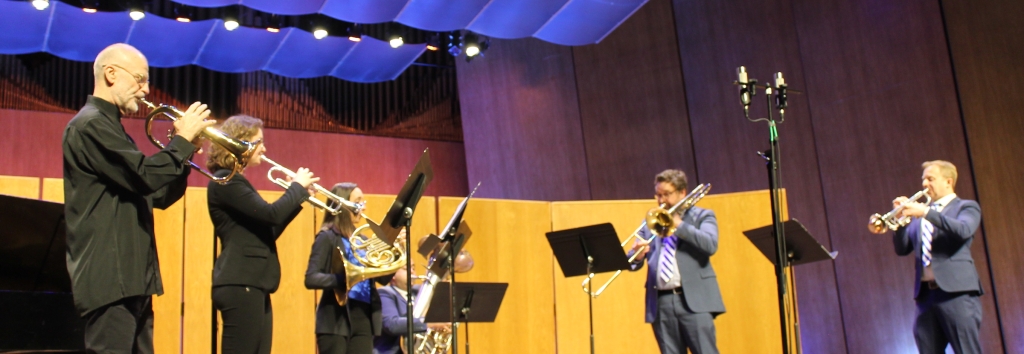
The Orfeo Trumpet Consort took the stage with the playing of Le CouCou by Louis Daquin. This excellent arrangement of a keyboard piece, found the quartet in beautiful form playing the many flowing lines and gentle intervals in a warm, graceful manner. The Orfeo Consort, again in arrangement for four trumpets, played Wolfgang Mozarts Ave Verum Corpus. The eloquent lines and harmonies of one of Mozarts most popular works were performed with great sensitivity and perfect intonation.
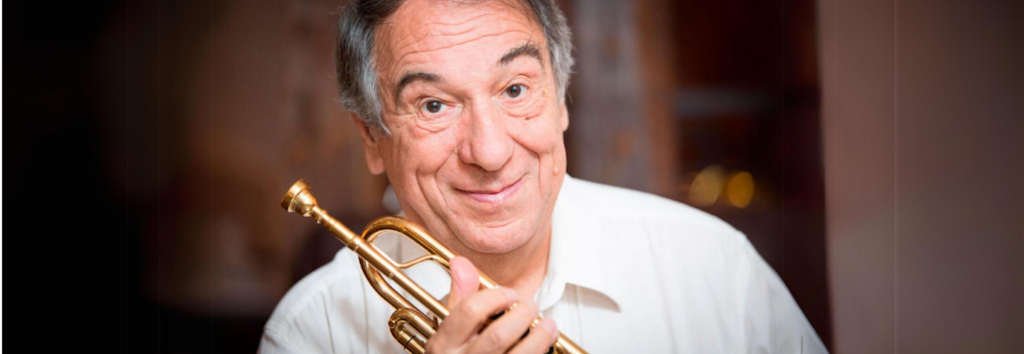
Turning again to the music of Wolfgang Mozart, the next work was a three-movement piece, entitled Post Horn Sonata. It was played by Crispian Steele-Perkins on a pocket cornet made in Manchester about 100 years ago.
 |
|
Crispian Steele-Perkins
|
The sonatas first movement was originally written for horn but not completed by the time of Mozarts death; it was later finished by his pupil, Franz Süssmeyer. Mr. Steele-Perkins rearranged the movement this time for the cornet in place of the horn. The final movement was based on themes for post horn from Mozarts large-scale serenade, the Post Horn Serenade. Some passages of this movement were performed on a long, straight coach-horn that extended out over the organ loft, this charming work was greeted with generous enthusiasm.
The first half concluded with H.I.F. Bibers glorious Sonata à7 heard in all its regal splendor as performed by the Orfeo Consort, joined by Alison Balsom and Crispian Steele-Perkins. The six trumpeters and organ filled the impressive Manchester Cathedral with the rich, dignified sounds that have been heard in such splendid venues for centuries.
 |
|
Murray Greig
|
After the interval, Benjamin Brittens intricate, polytonal fanfare for three trumpets, Fanfare for St. Edmundsbury, was performed by members of the Orfeo Trumpet Consort. The marvelous interweaving lines of the piece were played welllluminated by the great acoustics of the Cathedral.
Debussys evocative solo, Syrinxoriginally written for flutewas performed on trumpet by Martin Winter. The haunting melody was played from the rear of the church which added the mysterious character of the work. Mr. Winters performance of this work, in the original key and on E-flat trumpet, was nothing short of breathtaking!
 |
|
Crispian Steele-Perkins and Alison Balsom
|
John Gardiners Sonata de Chiesa is based on the Toccata from Monteverdis opera, Orfeo. The brilliant piece for two trumpets, performed by Ms. Balsom and Mr. Steele-Perkins, featured a blending of the old Monteverdi melody within modern contrapuntal textures and harmonies. Wonderfully performed, the piece deserves many more hearings.
The final three works on the program were performed by the Danish trumpeter, Michael Brydenfelt and organist Jonathan Scott. Mads Høcks modern-sounding Paraphrase Grégorienne à la memoire de Mauice Duruflé: Christus factus est pro nobis opened amid intense harmonies and full sounds from both
 |
|
Michael Brydenfelt
|
instruments. The soaring tone of Brydenfelt bountifully filled the vast reaches of the Cathedral. In total command of this tough piece, his playing was stellar. The work is in many contrasting sections and offers a broad palette of beautiful, intense, and contemplative colors that pays homage to the great French
composer/organist Duruflé. Gerhard Deutschmanns Introduktion and Allegro opened with a slow, flowing line built on a pretty tune. A superb partnership between the two instruments produced a lovely atmosphere in the introduction. The Allegro section called for energetic, full-bodied sounds. The highly idiomatic trumpet lines offered a stunning foil to the fortissimo organ chords that provided a strong foundation as the piece ended. Virtuosic playing stamped the concerts final piece, Julien-Francois Zbindens Dialogue, Op. 50. In its four sections, the piece moved from angular melodic lines over ever-changing chromatic harmonies to slower, meditatively simpler passages. Many of the faster, fully-scored sections called for a wide dynamic threshold and extended tessitura, a feature that was no problem for these two artists. After a short recap of the opening material, more dialogue ensued in the form of short cadenza-like episodes for both instruments. The piece unfolded to close with a vigorous conversation between the two collaborators complete with powerful finale.
For those of us fortunate enough to attend this marvelous concert, we witnessed the heavens open up with all of Gods gloryhis glorious gift of music in one of his glorious sites. Cheers to all responsible for organizing such an exhilarating concert.
|
Trumpet Prelude
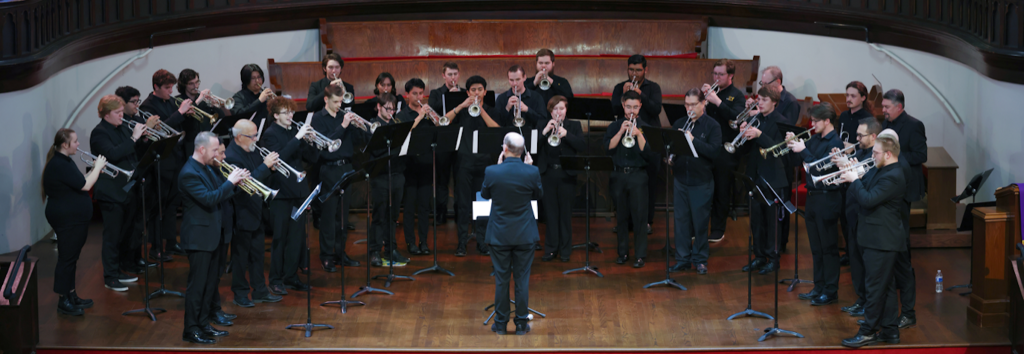
Chethams School of Music Trumpet Ensemble
director : Gareth Small
Marcus Farnsworth Contretemps Antiphonal Fanfare for Eight Trumpets
J.A. Altenburg arr. Greig Concerto for Seven Trumpets and Timpani

 |
|
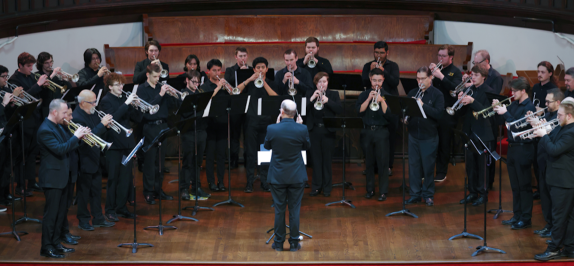
Chethams School of Music Trumpet Ensemble
|
Programme
Zelenka, J.D. Cavalry Fanfare No. 3 (OTC)
Vivaldi Concerto for 2 Trumpets (Crispian Steele-Perkins and Alison Balsom) (CSMSO)
Mozart, Leopold Concerto in D (CS-P) (CSMSO)
Handel Suite No. 2 (CS-P) (CSMSO)
Daquin Le CouCou (OTC)
Mozart, W. A. Ave Verum Corpus (OTC)
Mozart, W. A. Post Horn Sonata (CS-P) (with Organ)
Biber Sonata a 7 (MG, GS, MW, JB, AB, CSP)
Interval
Britten Fanfare for St. Edmundsbury (OTC)
Debussy Syrinx (MW)
Gardiner, John Sonata Da Chiesa (Crispian Steele-Perkins and Alison Balsom)
Høck, Mads - Praphrase Grégorienne à la memoire de Maurice Duruflé : Christus factus est pro nobis - Michael Brydenfelt
Deutschmann, Gerhard - Introduktion and Allegro (MB)
Defaye, Jean Michel Two Pieces (OTC)
Zbinden, Julien-Francois - Dialogue Op. 50 (MB)
 |
|
The Orfeo Trumpet Ensemble
|
|